
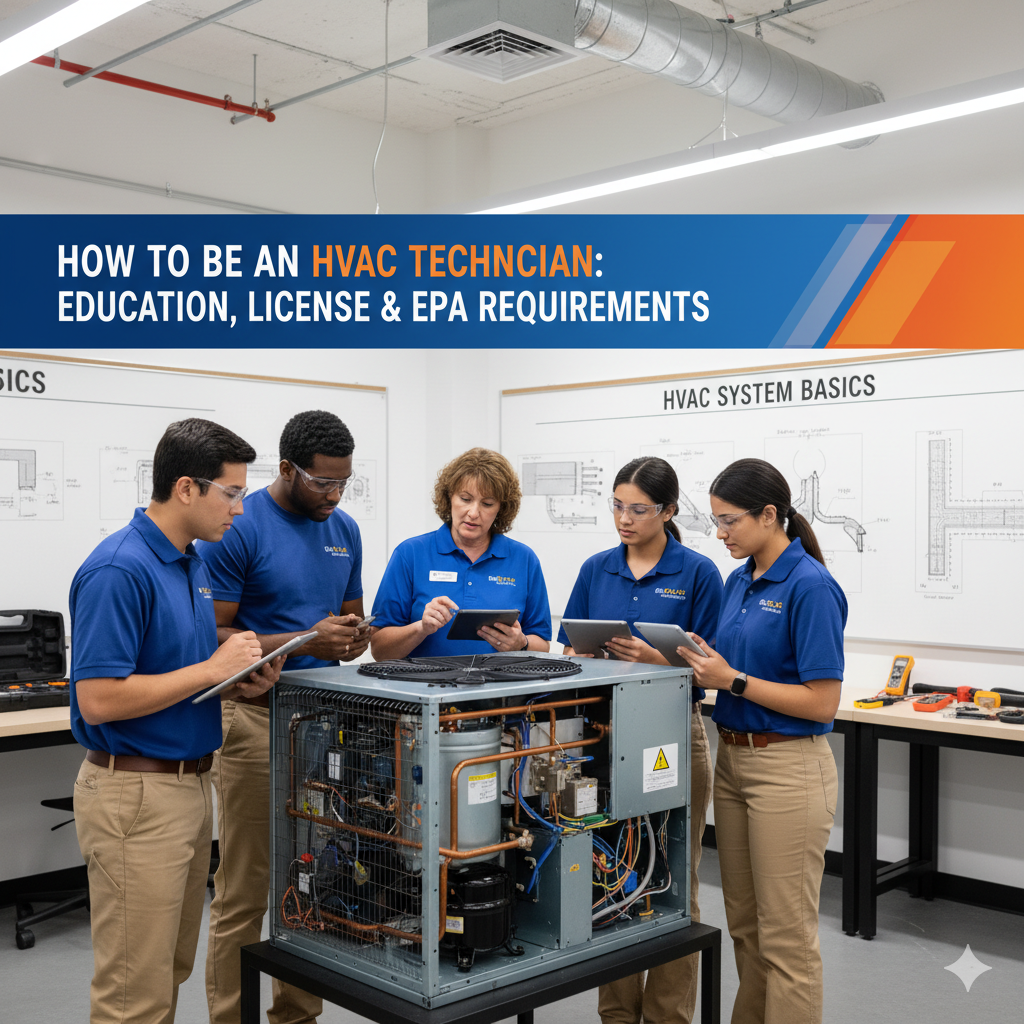
How to Be an HVAC Technician: Education, License & EPA Requirements
HVAC technicians are the skilled professionals who keep heating, ventilation, and air conditioning systems running efficiently — ensuring comfort in homes, offices, and industries all year long. If you’re looking for a stable, hands-on, and high-demand trade career, HVAC is one of the best options in 2025.
In this guide, we’ll walk you through how to become an HVAC tech — from education and certification to apprenticeships and licensing — so you can start your journey toward a rewarding HVAC career.
What Does an HVAC Technician Do?
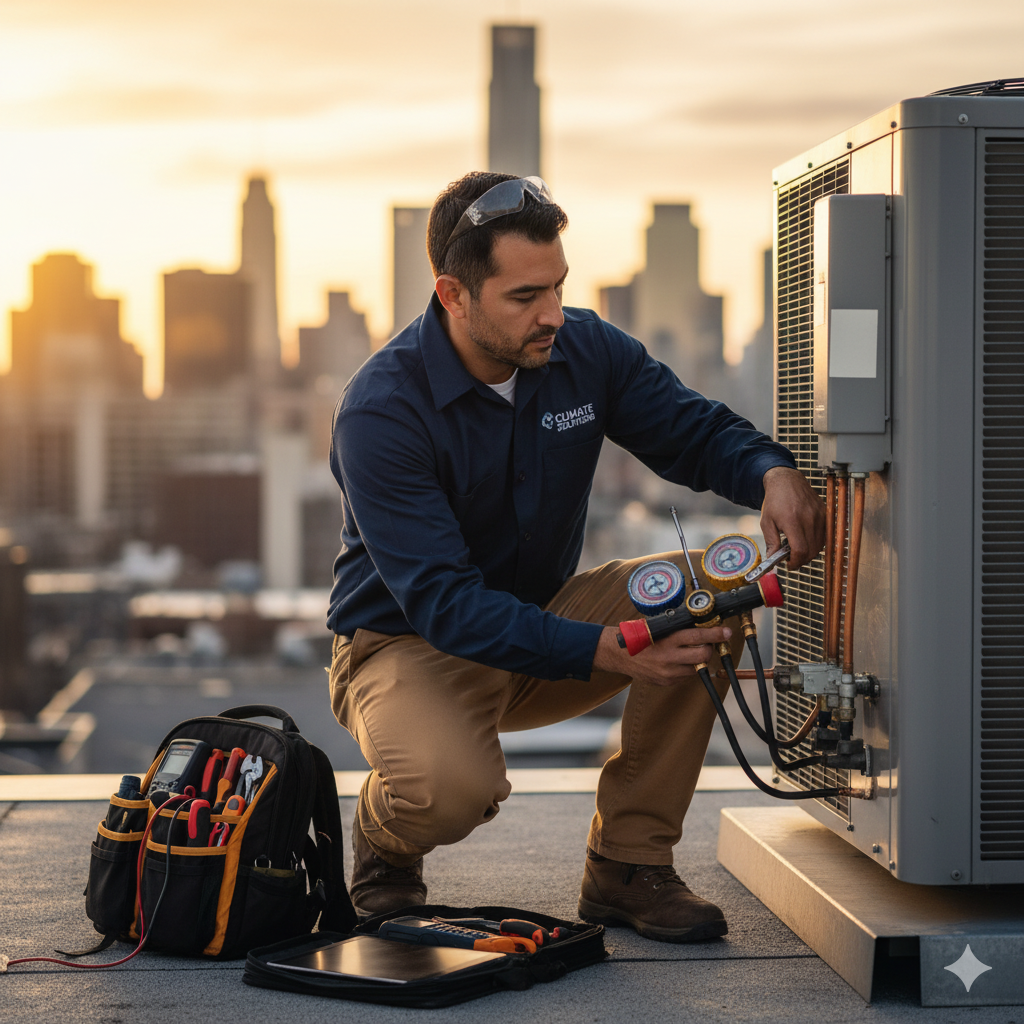
An HVAC technician installs, maintains, and repairs heating, ventilation, and air conditioning systems that regulate indoor comfort.
They work in a variety of environments, including homes, commercial buildings, hospitals, and industrial facilities, ensuring systems operate safely and efficiently.
To perform their job, HVAC techs use a mix of electrical, mechanical, and diagnostic troubleshooting skills, making it one of the most versatile skilled trades in the industry.
Common Job Titles
Within the HVAC field, professionals may hold a variety of titles depending on their role and specialization:
- HVAC Service Technician – Focuses on diagnosing, repairing, and maintaining HVAC systems.
- HVAC Installer – Specializes in setting up new heating, cooling, and ventilation units.
- Refrigeration Technician – Works on cooling systems such as walk-in freezers, chillers, and refrigerators.
- HVAC Engineer Assistant – Supports system design, planning, and technical documentation for large projects.
Steps to Become an HVAC Technician
Step 1 – Earn a High School Diploma or GED
A strong foundation in math, physics, and mechanical skills is essential for aspiring HVAC technicians.
Courses in electronics, blueprint reading, and shop work can give you an early advantage.
Step 2 – Enroll in an HVAC Training Program
Join a technical school or community college offering accredited HVAC programs.
Most programs last 6 months to 2 years and combine classroom learning with hands-on training.
Popular Subjects Include:
- Electrical systems and wiring
- Thermodynamics and airflow
- Refrigeration principles
- HVAC controls, tools, and safety practices
Step 3 – Join an HVAC Apprenticeship
An apprenticeship combines real-world job training with classroom education.
Typical duration: 3–5 years, often sponsored by trade unions, contractors, or industry associations.
Key Benefits:
- Earn while you learn
- Work alongside certified professionals
- Gain valuable on-the-job experience
Step 4 – Get HVAC Certification
Certifications validate your skills and boost employability.
Most Common Certifications:
- EPA 608 Certification: Required to handle refrigerants legally.
- NATE Certification: A respected industry credential for professional HVAC techs.
- HVAC Excellence Certification: Demonstrates advanced technical proficiency.
Step 5 – Obtain a State HVAC License
Each state has its own HVAC licensing requirements.
You may need to pass a state exam, show proof of field experience, and provide liability insurance.
Some states also require both technician and contractor licenses for independent work.
How Long Does It Take to Become an HVAC Tech?
The time it takes to become an HVAC technician depends on your chosen training path and whether you pursue certification or licensing.
| Path | Time Required |
|---|---|
| Certificate Program | 6–12 months |
| Associate Degree | 2 years |
| Apprenticeship | 3–5 years |
| Fully Licensed HVAC Tech | 2–5 years (average) |
You can start working as an assistant or apprentice within your first year of training, gaining valuable on-the-job experience while continuing your education.
HVAC Tech Courses and Training Options
There are several training paths to start your HVAC career, depending on your goals and schedule:
- HVAC Diploma Programs – A fast-track option designed for entry-level technicians, typically completed within 6–12 months.
- Associate’s Degree in HVAC Technology – A 2-year program that includes advanced technical training, system design, and business management.
- Online HVAC Courses – Ideal for working students who need flexibility while gaining foundational HVAC knowledge.
Recommended Study Topics
- Heating systems and airflow principles
- Refrigeration cycles and components
- Electrical troubleshooting and controls
- Energy efficiency and green HVAC technology
HVAC Tech Certifications Explained
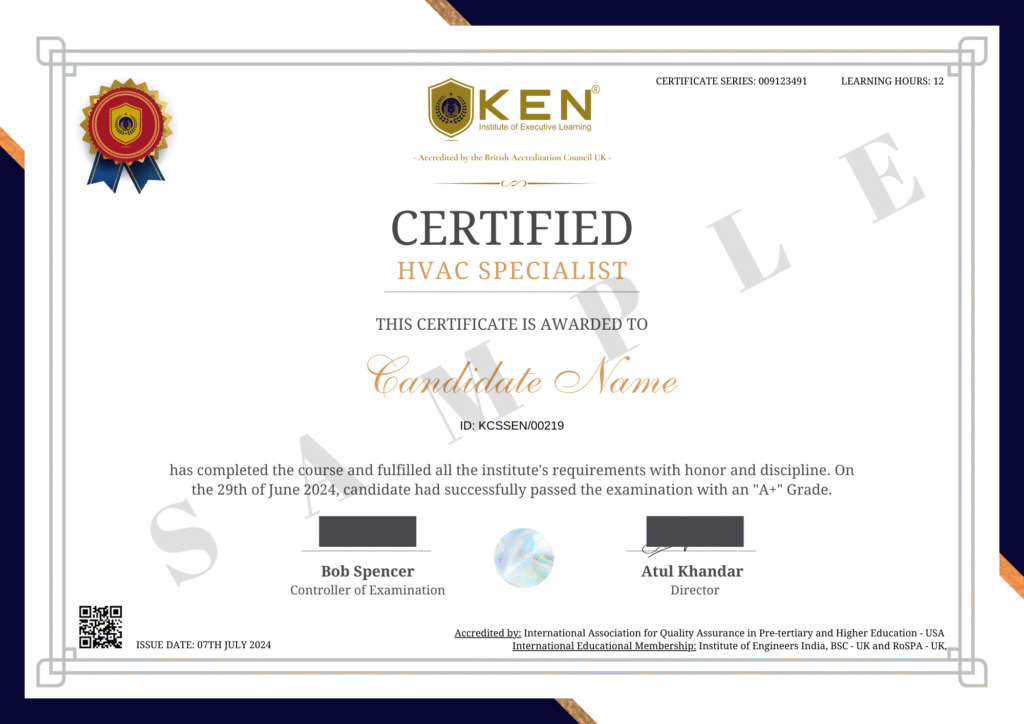
Getting certified is an important step in building your HVAC career. Certifications prove your expertise and make you more competitive in the job market.
EPA Certification for HVAC Techs
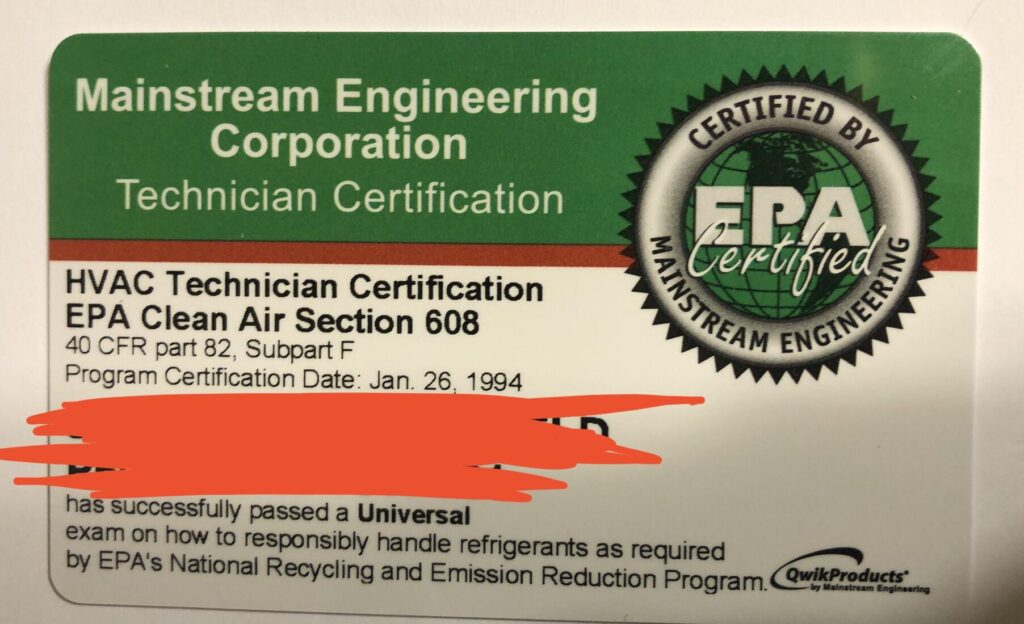
The EPA 608 Certification is mandatory by federal law for anyone handling refrigerants. It ensures technicians understand how to manage these substances safely and prevent environmental harm.
There are four certification types:
- Type I: For small appliances (like window A/C units)
- Type II: For high-pressure systems (residential and light commercial)
- Type III: For low-pressure systems (chillers)
- Universal: Covers all appliance types and refrigerant systems
NATE Certification
The North American Technician Excellence (NATE) certification is voluntary but highly respected in the HVAC industry. It demonstrates advanced technical knowledge and helps boost salary potential.
NATE exams cover areas such as:
- Air distribution systems
- Gas and oil furnaces
- Heat pumps and air conditioning units
Salary and Career Outlook for HVAC Technicians
The HVAC industry continues to offer strong job security and competitive pay, making it one of the most rewarding skilled trades in 2025.
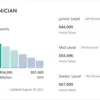
- Average Annual Salary (2025): $55,000 – $75,000
- Hourly Rate: $22 – $35 per hour
- Top Earners: Experienced or certified HVAC techs can make $90,000+ annually in commercial or industrial roles.
- Job Growth (2024–2030): +6%, according to the U.S. Bureau of Labor Statistics — faster than the national average.
- High-Demand States: California, Florida, Texas, and New York lead in employment opportunities due to hot climates and rapid construction growth.
Tip: Technicians with advanced certifications (like NATE or EPA Universal) often qualify for higher-paying supervisory or specialist positions.
Why Choose an HVAC Career?
Choosing a career in HVAC offers long-term stability, great income potential, and plenty of room for growth. It’s an ideal trade for those who enjoy hands-on, technical work and problem-solving.
Short Training Time – Most HVAC programs take less than 2 years to complete.
High Job Security – Heating and cooling systems are essential year-round, ensuring steady work.
Nationwide Demand – Every state needs skilled HVAC professionals for residential, commercial, and industrial projects.
Good Earning Potential – Technicians can quickly move from entry-level roles to high-paying specialist or management positions.
Opportunities for Self-Employment – Many experienced HVAC techs start their own businesses or become contractors.
Frequently Asked Questions (FAQs)
Q1. How long does it take to become an HVAC tech?
Typically 2–5 years, depending on whether you choose a diploma, degree, or apprenticeship path.
Q2. Do I need certification to work as an HVAC tech?
Yes — especially EPA 608 certification, which is required to handle refrigerants legally.
Q3. Is HVAC a good career in 2025?
Absolutely. The demand for HVAC technicians continues to rise as heating and cooling systems remain essential in homes and businesses.
Q4. What is the fastest way to become an HVAC technician?
Enroll in a 6-month to 1-year HVAC trade program and gain hands-on experience through internships or apprenticeships.
Q5. How much does an HVAC technician earn?
The average salary ranges from $55,000 to $75,000 per year, with commercial or senior technicians earning even more.
Conclusion
Becoming an HVAC technician in 2025 is a smart, stable, and rewarding career choice. With short training time, nationwide demand, and strong earning potential, HVAC professionals play a key role in modern comfort, sustainability, and energy efficiency.
Start your journey today — enroll in an accredited HVAC training program and earn your certification to build a successful, future-proof career.




Add comment