
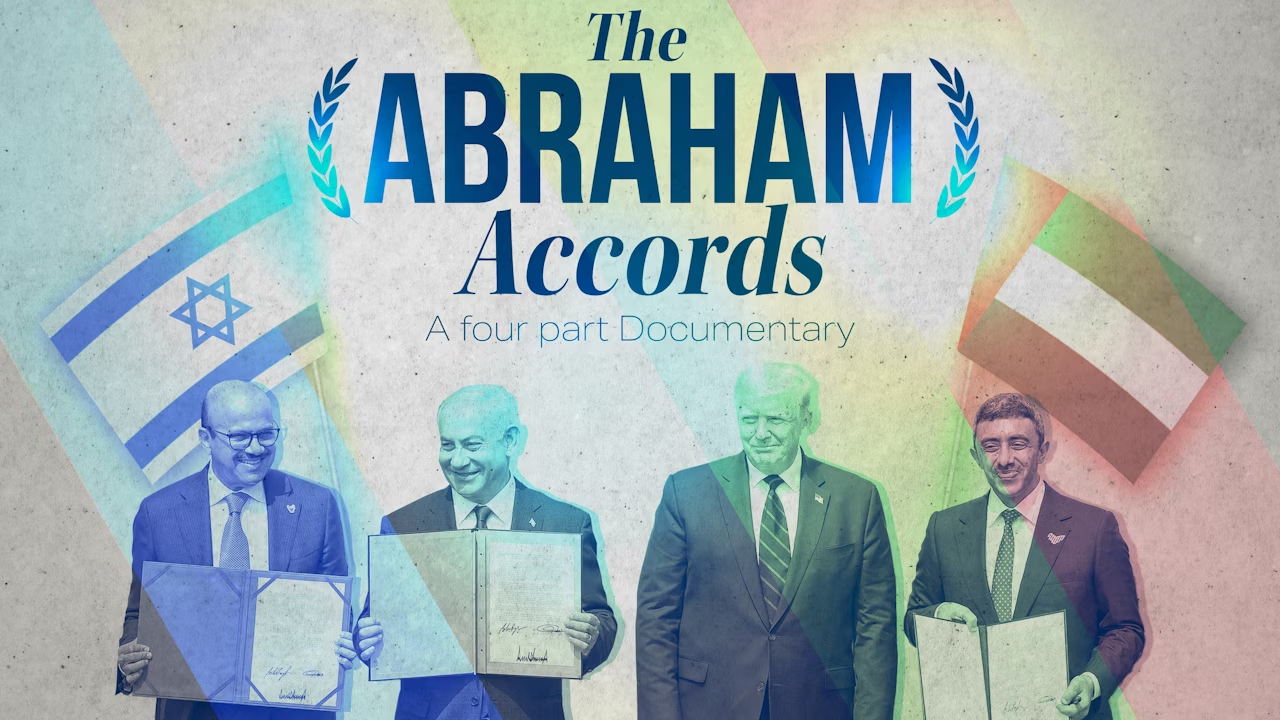
Understanding the Abraham Accords: A Historic Peace Agreement in the Middle East
The Abraham Accords are a series of peace and normalization agreements signed between Israel and several Arab nations in 2020, marking one of the most significant diplomatic breakthroughs in the modern Middle East. The initiative was brokered by the United States under the administration of President Donald J. Trump, aiming to foster stability, cooperation, and economic growth in the region.
The name “Abraham Accords” symbolizes the shared heritage of Abraham, a patriarch common to Judaism, Christianity, and Islam—reflecting the agreements’ goal of promoting unity and peaceful coexistence among peoples of different faiths.
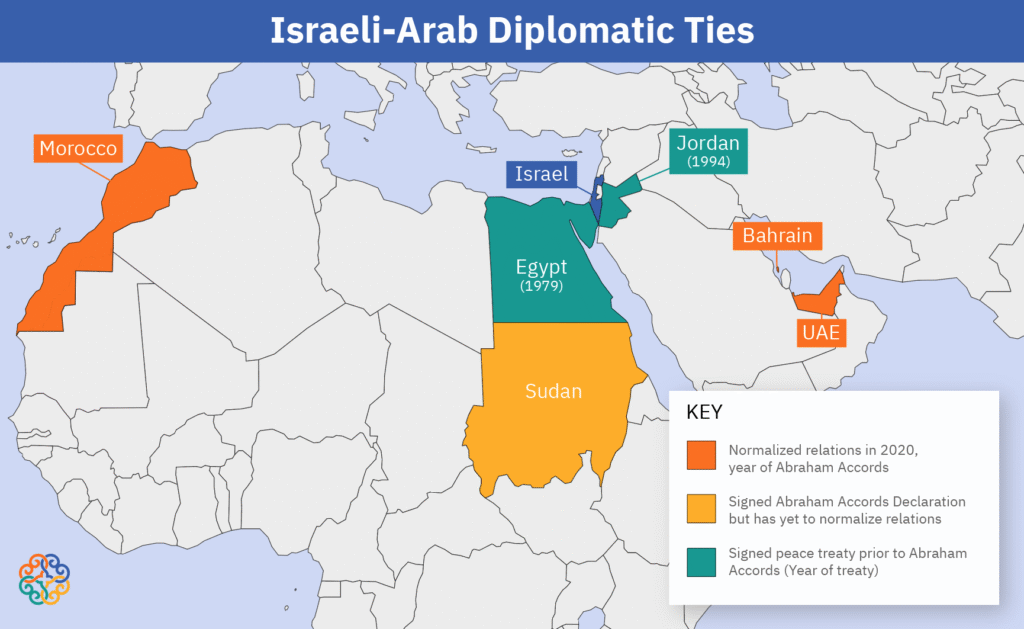
These accords were signed initially by Israel, the United Arab Emirates (UAE), and Bahrain on September 15, 2020, at the White House in Washington, D.C. Later, Sudan and Morocco also joined the initiative, further expanding the scope of diplomatic recognition between Israel and the Arab world.
The Abraham Accords are viewed as a turning point in Middle East diplomacy, representing a shift from decades of conflict toward dialogue, economic collaboration, and mutual respect. Beyond peace agreements, they opened opportunities for trade, tourism, technological exchange, and regional security partnerships.
Abraham Accords Summary
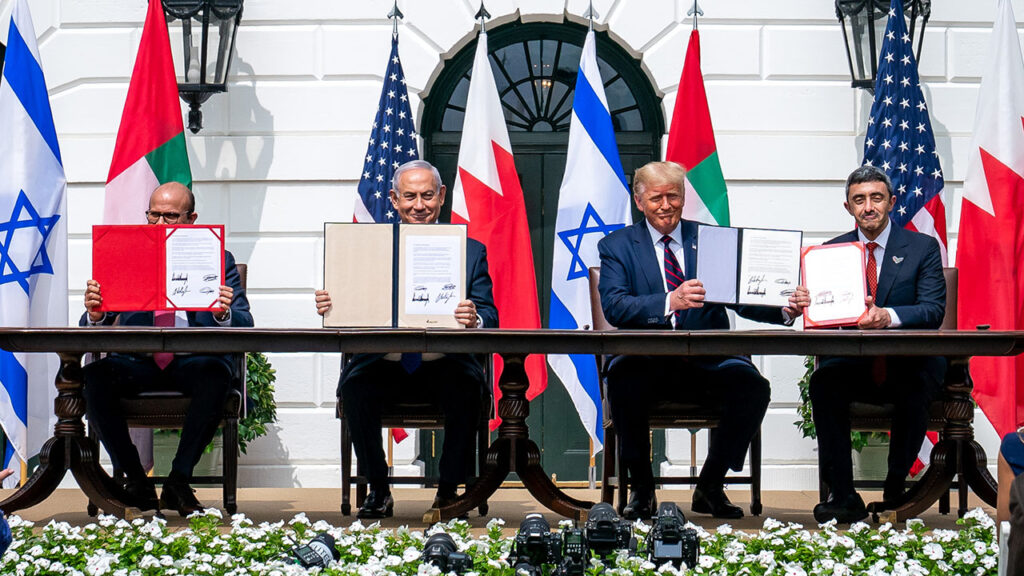
The Abraham Accords were formally signed on September 15, 2020, at the White House in Washington, D.C. The agreement marked a historic moment in Middle Eastern diplomacy, bringing Israel, the United Arab Emirates (UAE), and Bahrain together in a public commitment toward peace and normalization of relations.
The accords were brokered by the United States, with the Donald Trump administration playing a pivotal role in facilitating the negotiations. The signing ceremony was attended by then–U.S. President Donald Trump, Israeli Prime Minister Benjamin Netanyahu, UAE Foreign Minister Abdullah bin Zayed Al Nahyan, and Bahraini Foreign Minister Abdullatif bin Rashid Al Zayani.
The key goals of the Abraham Accords include:
- Establishing formal diplomatic relations between Israel and Arab nations
- Promoting peaceful coexistence and regional stability
- Enhancing economic, technological, and cultural cooperation
- Opening new opportunities for trade, tourism, and investment
These accords represented a significant step toward ending decades of political tension and fostering mutual recognition and collaboration across the Middle East.
Abraham Accords Countries
The Abraham Accords initially brought together Israel and two Arab nations — the United Arab Emirates (UAE) and Bahrain — in September 2020. Soon after, Sudan and Morocco also joined the peace initiative, expanding the circle of normalization between Israel and several Arab states.
Countries that signed the Abraham Accords
- United Arab Emirates (UAE) – The UAE was the first Arab nation to sign the accords with Israel. The agreement opened direct flights, allowed visa-free travel, and established cooperation in fields such as energy, innovation, and health.
- Bahrain – Signed the accords alongside the UAE, aiming to strengthen diplomatic and security ties with Israel while promoting mutual economic growth.
- Sudan – Joined the accords in October 2020, agreeing to normalize relations with Israel in exchange for U.S. incentives, including removal from the list of state sponsors of terrorism.
- Morocco – Became the fourth country to sign the accords in December 2020, with the U.S. recognizing Morocco’s sovereignty over Western Sahara as part of the deal.
Areas of Bilateral Cooperation
The Abraham Accords opened new pathways for collaboration between Israel and the participating Arab countries in several sectors, including:
- Trade and Investment – Boosting economic exchange and business partnerships
- Tourism – Launching direct flights and promoting cultural exchange
- Technology and Innovation – Sharing advancements in AI, cybersecurity, and green energy
- Defense and Security – Enhancing regional stability through intelligence sharing and joint initiatives
Together, these agreements have reshaped the diplomatic and economic landscape of the Middle East and North Africa (MENA) region, paving the way for long-term peace and prosperity.
Principles of the Abraham Accords
The Abraham Accords are founded on a set of shared principles that aim to promote long-term peace, cooperation, and prosperity across the Middle East. These principles reflect a historic shift from conflict toward dialogue, tolerance, and mutual respect among nations.
1. Promoting Peace, Tolerance, and Coexistence
At the heart of the Abraham Accords is the belief that peaceful coexistence is achievable through open communication and understanding. The signatory countries committed to fostering religious tolerance, encouraging interfaith dialogue, and recognizing the shared heritage of Abrahamic faiths — Judaism, Christianity, and Islam.
2. Respect for Sovereignty and Cultural Diversity
Each nation maintains its sovereignty, independence, and unique cultural identity while engaging in mutual collaboration. The accords emphasize non-interference in domestic affairs and uphold the importance of respecting national boundaries and cultural differences as a foundation for sustainable peace.
3. Mutual Development and Regional Prosperity
The Abraham Accords focus on creating opportunities for economic growth, technological innovation, and social development. By promoting cooperation in sectors like trade, education, healthcare, and renewable energy, the accords aim to build a stable and prosperous Middle East that benefits all parties involved.
In essence, the principles of the Abraham Accords represent a commitment to building bridges rather than barriers — turning a history of division into a future of unity and progress.
Significance of the Abraham Accords
The Abraham Accords mark one of the most transformative developments in Middle Eastern diplomacy in decades. Signed in 2020, these agreements reshaped political and economic relations between Israel and several Arab nations, setting the stage for a more stable and cooperative region.
1. Promoting Regional Stability
The accords reduced long-standing hostilities and opened direct communication channels between former adversaries. By establishing formal diplomatic relations, countries such as the UAE, Bahrain, Morocco, and Sudan demonstrated that cooperation is possible without prolonged conflict. This step has encouraged broader peace efforts and reduced regional tensions that once dominated the Middle East.
2. Strategic Benefits for Israel and Arab Nations
For Israel, the Abraham Accords strengthened security ties and opened doors to new trade and investment opportunities across the Arab world. Meanwhile, Arab nations gained access to advanced technology, agriculture, defense systems, and tourism partnerships from Israel, helping to modernize their economies. The collaboration also reinforced collective efforts against shared threats, such as extremism and regional instability.
3. Influence on Future Peace Agreements
The success of the Abraham Accords set a diplomatic precedent for other countries to follow. It demonstrated that peace agreements could be based on mutual interests rather than purely political alliances. Several nations have since expressed openness to similar normalization discussions, signaling a potential ripple effect across the Middle East and North Africa.
4. Global Reactions and Support
The United States played a pivotal role in brokering and supporting the accords, with former President Donald Trump’s administration facilitating the negotiations. The United Nations (UN) and many Western nations welcomed the agreement as a significant move toward peace and dialogue. Even global powers beyond the region recognized the accords as a model for conflict resolution through diplomacy.
Religious & Biblical Connections
The Abraham Accords not only hold political and diplomatic importance but also carry deep religious and symbolic significance. The name itself reflects a powerful connection to Abraham, a central figure in Judaism, Christianity, and Islam — three major Abrahamic faiths that trace their spiritual heritage back to him.
1. Are the Abraham Accords Biblical?
While the Abraham Accords are not a direct biblical prophecy, they draw inspiration from the spirit of peace and unity found in the Bible. Abraham is regarded as the patriarch of faith and the father of nations, symbolizing harmony and shared belief in one God. The accords aim to bring together nations historically divided by conflict — an idea that resonates with the biblical message of reconciliation and coexistence.
2. Why Are They Called the Abraham Accords?
The name “Abraham Accords” was chosen to highlight the shared spiritual ancestry of the participating nations. Jews, Christians, and Muslims all revere Abraham as a prophet and father figure. By naming the peace agreement after him, the architects of the accords symbolically reinforced the idea that despite religious differences, the nations involved share common roots of faith, morality, and humanity.
3. What Is God’s Agreement with Abraham?
According to the Bible (Genesis 12–17), God made a covenant with Abraham, promising him that his descendants would become a great nation and be a blessing to the world. This Abrahamic Covenant established the foundation for faith, obedience, and divine blessing. In the religious sense, the covenant symbolizes peace, faithfulness, and the pursuit of righteousness — values echoed in the modern Abraham Accords’ emphasis on cooperation and goodwill among nations.
4. Did Israel Break the Abrahamic Covenant?
This question often arises in theological discussions. From a religious standpoint, interpretations vary. Some believe that Israel’s historical challenges reflect human imperfection rather than a broken covenant, emphasizing that God’s promises to Abraham’s descendants remain everlasting. Others interpret political events differently, focusing on moral and spiritual responsibilities tied to that covenant.
However, in the context of the Abraham Accords, the focus is not on biblical prophecy but on diplomatic progress — demonstrating that nations with shared Abrahamic roots can seek peace through mutual respect and pragmatic cooperation.
Challenges and Future of the Abraham Accords
While the Abraham Accords marked a major milestone in Middle East diplomacy, their journey has not been without challenges. Political realities, leadership transitions, and regional sensitivities continue to shape how these agreements evolve in the future.
1. Why Did the Abraham Accords Face Criticism?
Despite their global praise, the Abraham Accords have faced criticism from several Arab and Muslim communities, primarily for not addressing the Palestinian issue. Many critics argue that normalizing ties with Israel without resolving the long-standing Israel–Palestine conflict undermines the principle of regional justice and solidarity.
Some political analysts also highlight that the accords, while economically beneficial, have yet to create tangible peace across all fronts — especially in territories still affected by unrest.
2. Ongoing Political and Territorial Disputes
The Middle East remains one of the most complex geopolitical regions in the world. Tensions between Israel and Palestine, disputes over Jerusalem’s status, and Iran’s influence in the region continue to challenge the broader peace vision. These factors have limited how far the spirit of the Abraham Accords can spread, especially among nations wary of domestic backlash or regional instability.
3. What Happened to the Abraham Accords After Leadership Changes?
Following leadership changes in both the U.S. and Israel, the momentum of the Abraham Accords slowed slightly but did not disappear. The Biden administration continued to support normalization efforts, emphasizing diplomacy and stability. Similarly, Israel has maintained its bilateral cooperation with signatory nations such as the UAE, Bahrain, and Morocco, especially in trade, tourism, and defense sectors.
However, shifting political priorities, regional conflicts, and global issues like the Russia–Ukraine war have sometimes diverted attention from further peace expansion.
4. Possible Expansion and Future Prospects
The future of the Abraham Accords still holds significant promise. Several other Arab and Muslim-majority nations — including Saudi Arabia, Oman, and Indonesia — have been mentioned in discussions about possible normalization with Israel.
If these nations join, it could further reshape Middle Eastern alliances, open vast opportunities for economic collaboration, and strengthen collective security against shared threats.
In essence, while the Abraham Accords have faced criticism and challenges, they continue to serve as a framework for dialogue, cooperation, and hope — a model for how peace in the Middle East might gradually take root through mutual respect and pragmatic engagement.
Conclusion: Lasting Impact of the Abraham Accords
The Abraham Accords represent a defining moment in modern Middle Eastern diplomacy — a courageous step toward peace, cooperation, and mutual understanding among nations long divided by conflict. Signed in 2020 under U.S. mediation, these agreements opened new doors for economic growth, technological exchange, and cultural connection between Israel and several Arab countries.
While challenges remain — especially regarding the Palestinian issue and shifting political landscapes — the Accords have proven that dialogue and diplomacy can achieve progress where decades of hostility once prevailed.
Beyond politics, the Abraham Accords symbolize something deeper: the shared spiritual and historical roots of Abrahamic faiths — Judaism, Christianity, and Islam — and the hope that these shared values can unite rather than divide.
As the world watches how these partnerships evolve, the Abraham Accords stand as a blueprint for future peace efforts, reminding us that sustainable stability comes through trust, respect, and collaboration.
In short: The Abraham Accords are not just treaties; they are a vision of coexistence — one that continues to inspire the Middle East and the world.
https://alibilal.shop/understanding-divorce-emotionally/






Add comment